Stay Ahead with Solar Insights!
Unlock the power of the sun with our OnSite Energy Newsletter! Stay informed with the latest solar trends, tips, and innovations that can help you save money and reduce your carbon footprint. Sign up today and be part of the energy revolution!
When the Grid Goes Down, Will Your Solar Keep Working?
Montanans know how quickly “normal” can change.
A winter storm rolls through. A tree takes out a power line. Wildfire conditions affect service. Suddenly, the refrigerator, internet, well pump—or equipment your business depends on—isn't working.
So if you have solar panels on your roof, you're good...right?
Unfortunately not.
One of the most common misconceptions about solar is that having panels automatically means you'll have electricity during a power outage. All grid-connected solar systems without batteries are designed to shut down when the grid goes down.
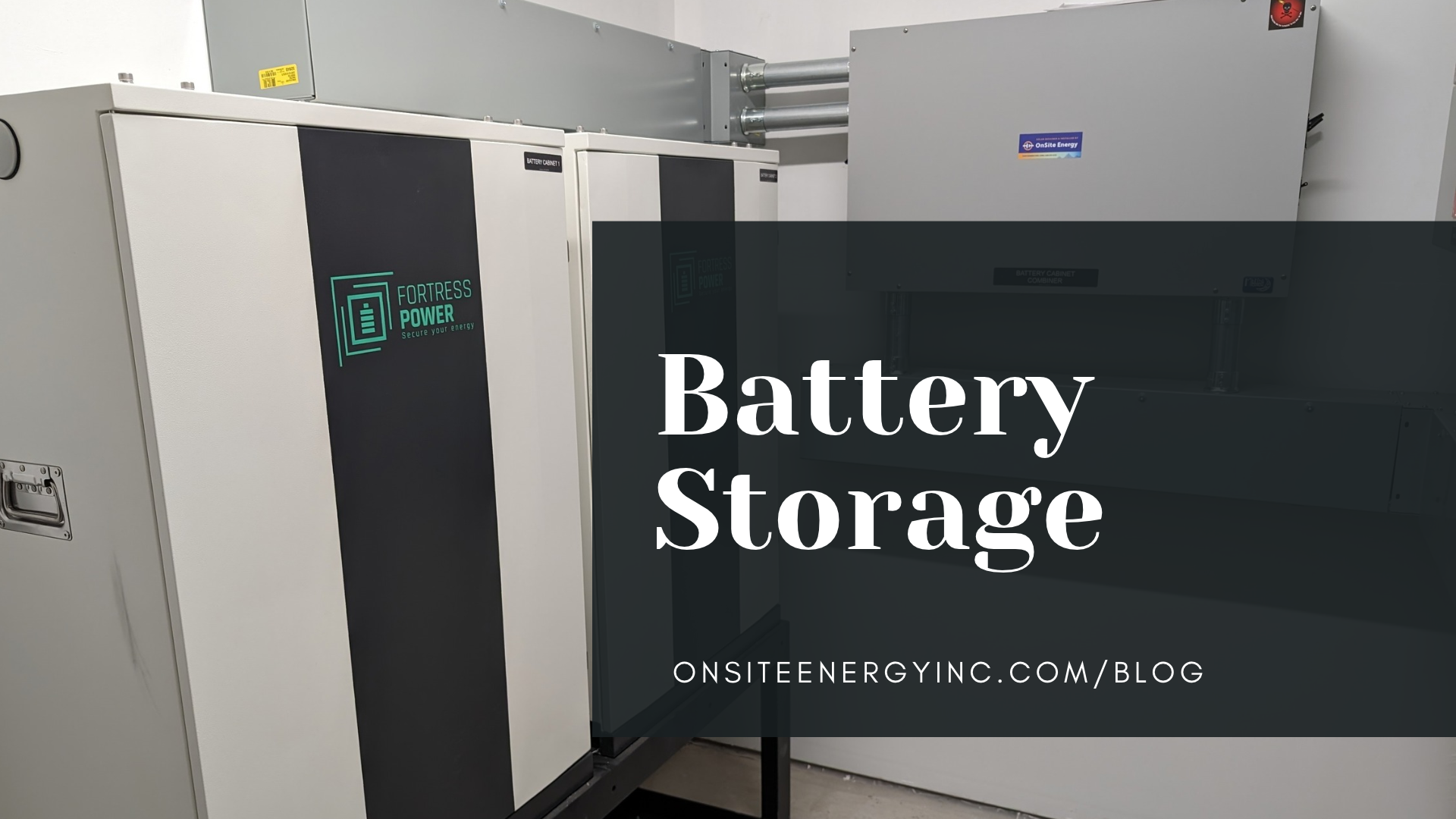
If keeping the power on is one of your goals, that's where energy storage systems —also commonly called battery backup— come in.
Solar makes energy. Storage lets you use it later.
That's the simplest way to think about it.
Your solar array produces electricity when conditions allow. An energy storage system gives you somewhere to store electricity so it can be available when you need it—including during a grid outage when appropriately designed for backup power.
But here's where things get more interesting:
You don't necessarily need to back up your entire house or business.
Maybe what matters during an outage is keeping your refrigerator, freezer, well pump, a few lights and internet running.
For a business, it might be refrigeration, communications, security systems, servers or a few pieces of equipment you absolutely can't afford to lose.
Figuring out what needs to stay on is often more useful than starting with “What battery should I buy?”
In Montana, backup power can mean something different.
Montana isn't exactly known for mild weather and densely packed infrastructure. For some properties, particularly rural ones, losing electricity can also mean losing access to other essentials.
On one rural Montana property, energy storage became much more than backup power during a March 2026 outage. Power lines across the river went down and sparked a fire, and high winds raised concerns that embers could cross onto the homeowner’s property. Because his batteries kept the well pump running, he was able to connect hoses around his home and outbuildings in case he needed to fight the fire.
Fortunately, the fire was contained. But the experience showed just how personal energy resilience can be in Montana. Sometimes keeping the power on isn't about keeping the lights on—it’s about keeping the systems you may actually need in an emergency running.
It's no longer just:
“How much money will solar save me?”
It becomes:
“How resilient do I want my home to be when something goes wrong?”
And businesses have their own version of that question: What does an hour, six hours or a day without power actually cost us?
So...how much battery backup do I need?
Here's where we'd be suspicious of anyone giving you an answer before asking you some questions.
How much energy storage makes sense depends on what appliances and mechanical systems you want to power, how much electricity those things use, how long you want them to run, whether you have solar to recharge the batteries during the day, and whether or not the infrastructure at your property is suitable for an installation.
A refrigerator and internet connection are one thing. An all-electric house in January is another.
A commercial operation is another thing entirely.
Good energy storage design starts with the problem you're trying to solve.
Which brings us to something else we think Montana homeowners should know.
We aren't going to knock on your door.
Literally. OnSite isn't a door-to-door solar sales company.
Solar and energy storage are long-term investments, but they’re sometimes sold like short-term products. A salesperson shows up at your door with a system to sell, and that system may be more than you actually need—or not enough to accomplish what you thought you were buying it for.
There’s another question worth asking, too: Who will be there after the sale? Solar companies come and go, and homeowners can be left with systems they don't fully understand and no installer to call when they need service years later.
OnSite has taken a different approach. One of our founders, Orion, grew up off-grid here in Montana, and we've been designing, installing and servicing solar across the state since 2012. We've now installed more than 1,200 projects across Montana and have been recognized as a Top Solar Contractor in the U.S. eight times.
Our job is to understand what you're trying to accomplish and design around it. With energy storage especially, that might mean backing up a few critical loads, building greater resilience into your entire property, installing solar without storage, or deciding you're not ready for batteries yet.
You should understand what you're buying, why it's sized the way it is, and who you can call when you need help five or ten years from now.
Could energy storage make sense for your home or business?
Start with one question:
If the grid went down tomorrow, what would you absolutely need to keep running?
That's something we can help you figure out.
Whether you're considering solar and storage together or already have solar and want to explore adding battery backup, our Montana-based team can look at your energy use, the infrastructure of your property, and your overall priorities and help you understand your options.
No door knocking required.
[EXPLORE ENERGY STORAGE][TALK TO AN ONSITE ENERGY CONSULTANT]